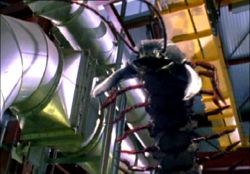
001 future preditor
Future Predators (sometimes referred to as just 'Predators') are a carnivorous species from the far future. They stand at two metres tall and weigh half a ton. Conner and the other members of the crew believed that they entered the present day not from the past but from the future.

002 Coelurosauravus (rex)
Coelurosauravus are roughly iguana sized lizard-like diapsid reptiles native to the Permian period. It has specialized wing-like structures allowing it to glide. These were rod like structures with skin stretched over them; this features is unique to this genus. The average length of the specimens were 60 cm and the body was long and flat, suitable for its gliding nature.

003 Diictodon
Diictodon were a very common type herbivore that lived about 255 million years ago. Although they lived before the dinosaurs they were more closely related to mammals – hence their mammal like behavior. awwwww! : )

004 Gorgonopsid
Gorgonopsia are a group of creatures that where at one time called "mammal-like reptiles", though in most current classification systems, they are not true reptiles, instead much more closely related to true mammals. Their mammalian specializations include differentiated tooth shape, the fully developed temporal fenestra, pillar-like rear legs and even ear bones, as well as other traits associated with its mammalian descendants.
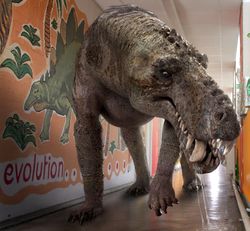
005 Scutosaurus
Scutosaurus was a genus of armour-covered Permian period pareiasaur, loosely related to the turtles. Its genus name refers to large plates of bony scutes (osteoderms) set in the skin, as a defense against predators. But the most unusual thing about them were the heavy skulls ornamented with strange knobs and ridges. It was of a very heavy build, almost rhinoceros-like. Unlike most reptiles, held its legs underneath its body with stubby toes to support its great weight.

006 Arthropleura
Arthropleura was a 2–3 metre (6–10 feet) long, relative of centipedes and millipedes, native to the Upper Carboniferous of Britain and the United States. It was the largest known land invertebrate of all time and grew so large because of the high percentage of oxygen in the Earth's atmosphere at that time. A burrower, they have poor eye sight but have excellent sense of smell and touch.